


What's Included:
Plaster Figures: Hand-poured shapes like animals, cars, or holiday items.
Paint Set: Small pots of non toxic acrylic or non toxic washable (by request) paint in different colors.
Paintbrushes: One or more basic brushes for fine details and broad strokes.
How It Works:
Prepare your workspace:
Set up a clean workspace with paper towels or a drop cloth. Have a small cup of water ready to rinse paintbrushes.
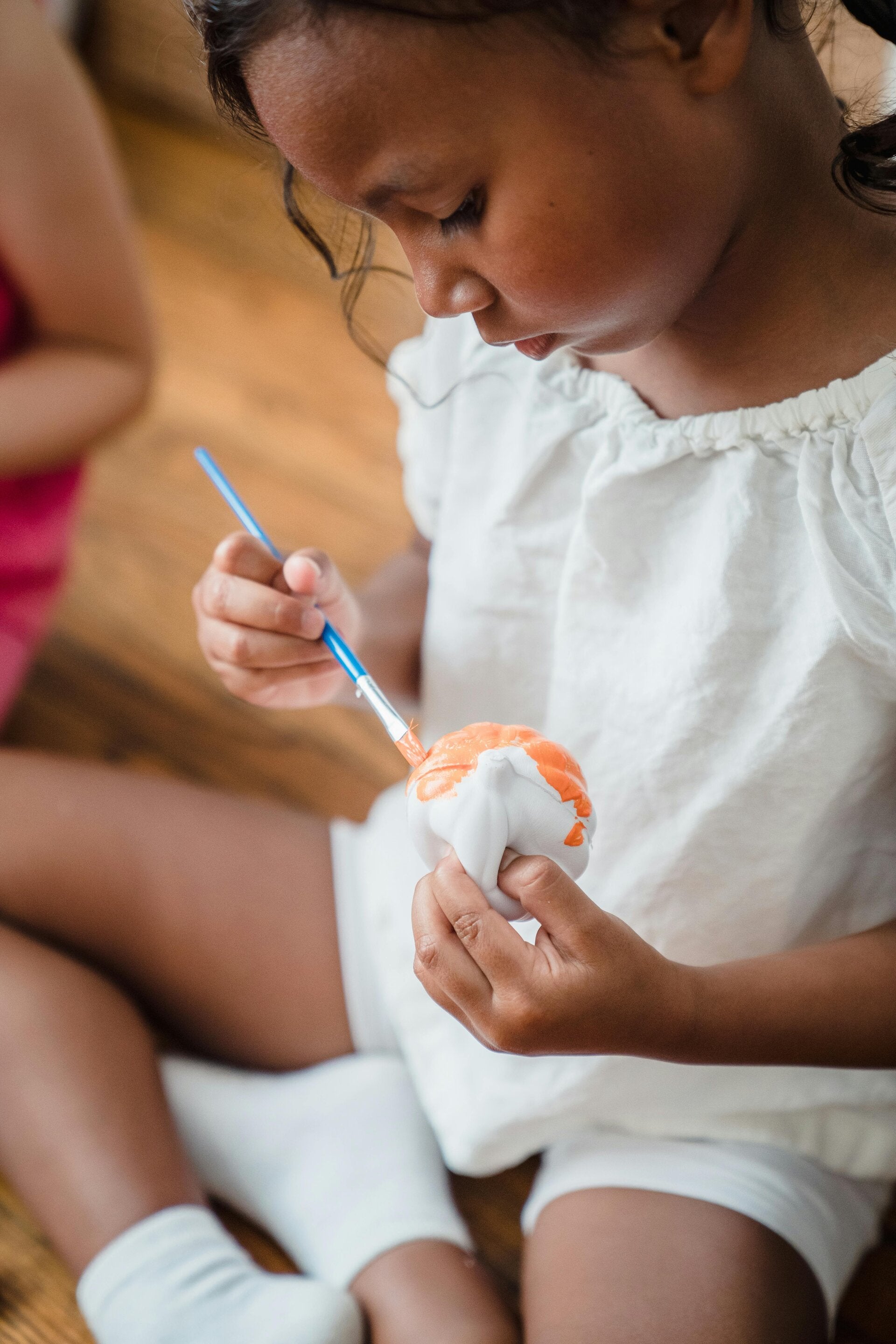
Painting your figurine:
Use the provided paints and brushes to bring your plaster piece to life. Don't be afraid to mix colors to create new shades!
Let it dry:
Once you're happy with your masterpiece, let it dry completely. This usually takes a few hours, depending on how thickly the paint was applied.
Seal your creation (optional):
To protect your artwork and give it a glossy finish, you can apply a clear sealant. This step is especially recommended if your figurine will be handled frequently or displayed outdoors.
Display and enjoy:
Show off your unique creation, or give it as a handmade gift to someone special!
How to increase your color options
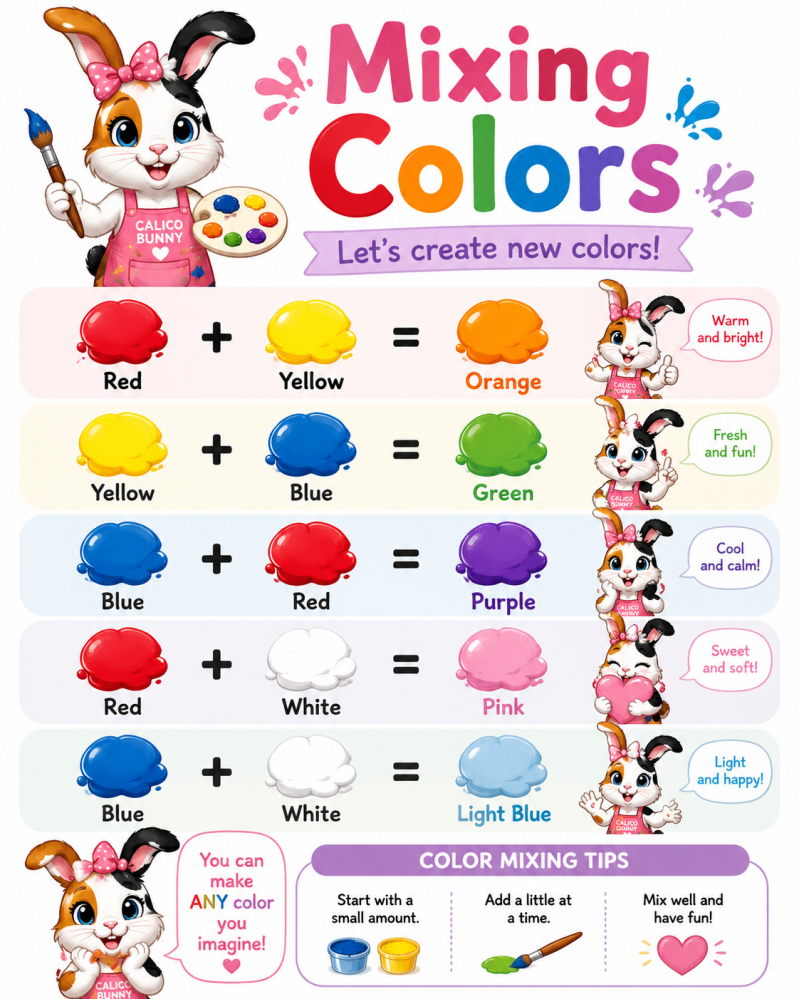
Primary Colors: These are the main colors that cannot be created by mixing other colors. The primary colors are red, blue, and yellow.
Secondary Colors: These colors are made by mixing two primary colors. For example, mixing red and blue makes purple, blue and yellow make green, and red and yellow make orange.
Tertiary Colors: These colors are created by mixing a primary color with a secondary color. Examples include red-orange, yellow-green, and blue-purple.
Examples of Mixing Colors
Let’s look at some simple examples of how to mix colors:
- If you mix red and yellow, you get orange. This is a great color for sunsets or cheerful drawings!
- Mixing blue and yellow gives you green, perfect for painting trees and grass.
- When you mix red and blue, you create purple, which is often used for flowers and royal themes.